A New Perspective on PAIN
Pain is one of the most powerful signals the human body can produce. It can interrupt sleep, change our movement, affect our mood, and instantly pull our awareness toward one particular part of the body. From a biological perspective, pain is a protective mechanism designed to alert us that something may require attention. But within the Ki Train method, we can also explore pain from another perspective—one that does not replace medical understanding but adds a useful layer of awareness.
We can look at the word PAIN as a simple reminder:
P – Pay
A – Attention
I—Inwards
N – Now
Pay attention inward now.
This is not a medical definition of pain, but rather a practical way of understanding its message. Pain forces attention inward. When something hurts, the mind immediately becomes interested in that area. Everything else can suddenly become secondary. Why? Because attention is one of the most valuable resources available to us, humans.
A fundamental principle used throughout the Ki Train Method is the following:
Energy flows where attention goes.
Learning how to consciously direct that attention may change the way we relate to discomfort, recovery, and the body’s natural capacity for self-regulation.
1. Pain: The Body’s Demand for Attention
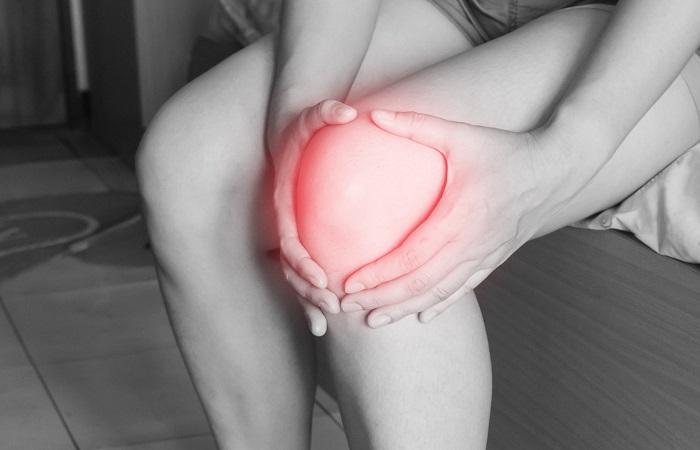
Imagine accidentally hitting your knee against a table. Within a fraction of a second, your entire attention moves toward your knee. You may instinctively place your hand over the painful area. Your breathing changes. Your posture changes. Your mind temporarily forgets what it was thinking about before the impact. The body has successfully achieved something extremely important: it has captured your attention.
From a survival perspective, this makes sense. If there is an injury, inflammation, excessive pressure, or another problem, the nervous system needs the organism to become aware of it. Pain can encourage us to stop using an injured area, protect it, and seek help when necessary.
This is why pain should never simply be ignored. Persistent, severe, or unexplained pain should always be properly evaluated by a qualified medical professional.
But after appropriate diagnosis and treatment, another question becomes interesting:
How do we use our attention during the healing process?
Many people experience pain with resistance.
“My back hurts.” / “My knee hurts.” / “I don’t want this pain.”
“When will this disappear?”
The mind begins fighting the sensation. This can create tension around an area that is already uncomfortable. Breathing becomes shallow, muscles contract, and the nervous system remains alert.
The Ki Train perspective invites us to experiment with something different. Instead of immediately fighting the sensation, we begin by observing it. Where exactly is it? Is it sharp, dull, warm, cold, heavy, or pulsating? Does it change when we breathe? Does it remain in one place?
The moment we start observing carefully, our relationship with the sensation begins to change. Pain becomes not only something we experience but also something we can consciously investigate.
2. Energy Flows Where Attention Goes
Attention is normally scattered throughout the day. We think about work, phones, conversations, responsibilities, finances, family, plans, and problems. Even when our body is sitting quietly, our mind may be traveling everywhere. Traditional practices such as Qi Gong and Tai Chi reverse this tendency. Instead of constantly sending attention outward, we deliberately bring awareness back into the body.
We notice posture, breathing, muscular tension, balance, and internal sensations.
This is where the principle “Energy flows where attention goes” becomes practically useful.

In traditional Chinese practices, attention, breath, and movement are often trained together. Modern scientific language may describe some of the effects differently, focusing on nervous-system regulation, relaxation, circulation, body awareness, and changes in pain perception.
The terminology may differ, but the practical exercise is surprisingly simple:
Become present inside your body.
If an area requires recovery, instead of spending the entire day mentally fighting it, we can periodically bring calm awareness toward that region.
We breathe.
We relax unnecessary tension.
We observe without fear.
We move gently when movement is appropriate.
We allow the body’s natural recovery processes to do their work.
This does not mean that attention magically repairs every injury. Healing remains a biological process, and different conditions require different medical approaches. However, the mental and physical environment in which recovery occurs matters.
A body constantly held in tension is experiencing a very different internal state from a body practicing conscious relaxation.
This is one reason Qigong can become an important complementary practice during periods of recovery.
3. Qi Gong and the 3 Pillars of Ki Train
Qi Gong teaches us something that sounds simple but can take years to master:
How to be relaxed without collapsing, attentive without becoming tense, and active without wasting energy.
These qualities are reflected in the three pillars of the Ki Train Method:
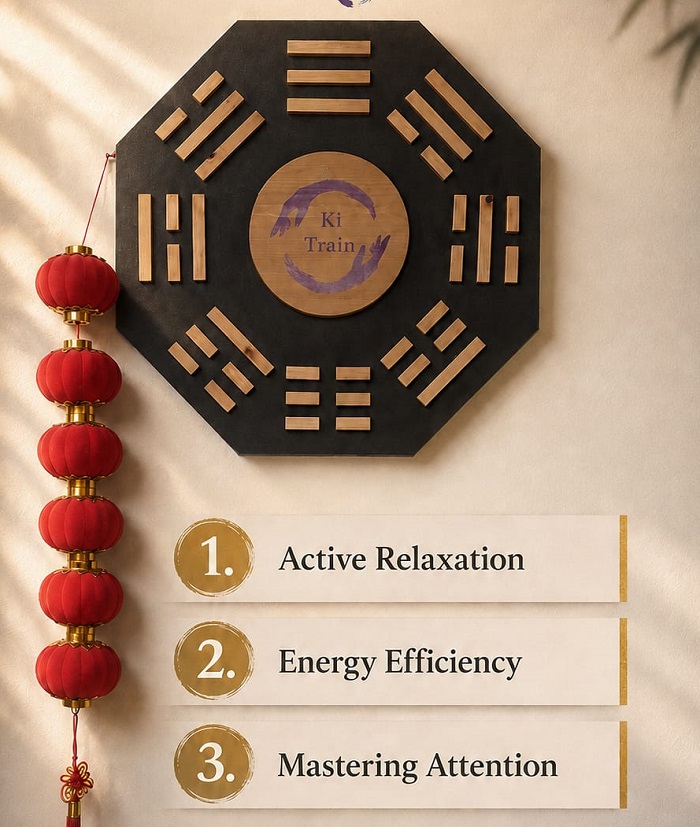
Active relaxation teaches us to identify unnecessary tension.
Pain frequently causes protective tension around an area. Some protection may be necessary, particularly after an injury, but excessive tension elsewhere in the body can consume energy and increase discomfort.
Through breathing, posture, and slow movement, we practice releasing what is unnecessary while maintaining appropriate structure.
Energy efficiency asks another question:
Where am I wasting energy?
We waste energy through excessive muscular contraction, emotional resistance, repetitive thinking, and constant mental stimulation.
During recovery, conserving unnecessary expenditure can create a calmer environment for the body.
Finally comes perhaps the most important pillar:
Mastering Attention.
Attention normally follows whatever stimulus is strongest.
A loud sound captures it.
A phone notification captures it.
Fear captures it.
And pain captures it.
Training attention means gradually developing the ability to decide where awareness goes.
During Qi Gong practice, instead of allowing pain to dominate our entire consciousness, we can expand awareness around it.
We notice the painful area, but we also notice the breath.
We notice the feet.
We notice posture.
We notice movement.
We notice the whole body.
In this sense, we are not trying to “defeat” pain. We are training the nervous system and the mind not to let one sensation occupy the entire field of awareness.
The sensation may still exist, but our relationship with it begins to change.
4. From Fighting Pain to Participating in Healing
Perhaps the most important shift is moving from a mentality of fighting pain to a mentality of participating in healing.
When people experience discomfort, the natural question is often the following:
“How do I make this pain disappear?”
But another question may sometimes be more useful:
“What does my body need from me right now?”
Perhaps it needs rest.
Perhaps movement.
Perhaps medical treatment.
Perhaps better sleep.
Perhaps hydration.
Perhaps rehabilitation.
Perhaps less stress.
Perhaps simply a few minutes in which we stop directing all our attention toward the outside world and finally listen inward. Mozart has helped me many times to focus my attention when I want to study or research or simply observe my thoughts. Hope the below will help you too. Try.
This is where PAIN becomes a reminder:
Pay Attention Inwards Now
Pain has already captured our attention.
The next step is learning how to use that attention intelligently.
Qigong offers a structured way to practice this skill. Slow movements, conscious breathing, relaxation, and directed awareness bring us back into contact with the body.
Over time, practice can teach us not only how to react when something hurts, but also how to notice smaller signals before they become louder ones.
Tension.
Fatigue.
Restricted breathing.
Poor posture.
Emotional agitation.
Loss of balance.
These subtle signals are often present long before the body is forced to shout.
The ultimate objective of the Ki Train Method is, therefore, not simply to practice when we are in pain. It is to develop enough awareness that the body does not always need pain to get our attention.
Through active relaxation, energy efficiency, and mastering attention, we develop a different relationship with ourselves. We stop treating the body as something that should simply obey the mind. We begin listening to it. And perhaps that is one of the deepest lessons pain can teach us:
Healing begins with attention.