Building Strength with Tai Chi
When we think about strength, we often imagine lifting heavy weights or developing large muscles. But there is another form of strength that is equally important: structural strength.
Structural strength is the ability of the body to maintain alignment, stability, and control while standing, moving, changing direction, or transferring force. Instead of relying on one isolated muscle, the body learns to function as one connected structure.
This is one of the areas where Tai Chi practice can be particularly valuable.
Strength Through Structure
A fundamental principle of Tai Chi is maintaining correct body alignment while remaining relaxed. The feet connect with the ground, the knees and hips coordinate, the spine remains naturally extended, and movement is transmitted through the entire body.
Although Tai Chi movements appear soft and slow, the muscles are continuously working.
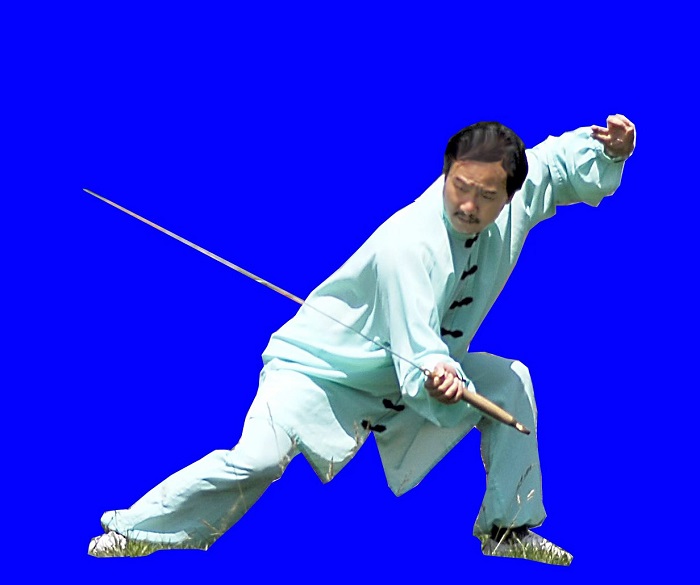
A biomechanical study comparing Tai Chi movements with ordinary walking found considerably greater activation of several lower-body muscles, particularly the knee extensors, hip abductors, and hip adductors. These muscles play an important role in supporting the pelvis, controlling the legs and maintaining postural stability.
This helps explain why slow movement can still create significant physical conditioning.
Slow Movement Creates a Different Kind of Load
During Tai Chi we frequently transfer the body weight gradually from one leg to another. Sometimes almost the entire body weight is supported by one leg while the other leg moves.
Because these transitions happen slowly, the supporting muscles must remain active for longer periods.
Research examining Tai Chi gait found greater involvement of the ankle, knee, and hip muscles compared with normal walking, together with longer periods of isometric and eccentric muscle activity.
Eccentric strength—the ability of muscles to remain controlled while lengthening—is particularly important when lowering the body, descending stairs, or recovering from a loss of balance.
Long-term Tai Chi practitioners have also demonstrated greater knee-extensor strength and reduced postural sway compared with control groups.
Strength and Balance Develop Together
Tai Chi does not separate strength from balance.
Every controlled weight transfer asks the nervous system to coordinate the feet, ankles, knees, hips, spine, and upper body simultaneously. Over time, we are not simply strengthening muscles; we are improving the body’s ability to organize those muscles around a stable structure.
A 2021 systematic review and meta-analysis of randomized controlled trials concluded that Tai Chi can produce moderate improvements in several components of physical fitness, including strength-related measures, balance, walking capacity, and spinal flexibility. The authors also noted that lower Tai Chi stances may provide greater training intensity.
This is important because Tai Chi can be adapted. Beginners may practice higher positions, while experienced practitioners can gradually lower their stance, slow their transitions, and increase single-leg loading.
Building Strength Without Becoming Stiff
At Ki Train, strength is not simply the ability to produce force.
We want the body to become strong while remaining relaxed, mobile, and adaptable.
Tai Chi teaches us to stabilize without unnecessary tension. Instead of creating rigidity, we develop a structure capable of receiving, transferring, and releasing force efficiently.
With consistent practice, the legs become stronger, balance improves, and movement becomes increasingly integrated.
The goal is not simply stronger muscles.
The goal is a stronger body structure.
Published Research
- Wehner C. et al. Effect of Tai Chi on muscle strength, physical endurance, postural balance, and flexibility: a systematic review and meta-analysis. BMJ Open Sport & Exercise Medicine, 2021. Read the study
- Chen P.J. et al. Biomechanics analysis of seven Tai Chi movements. Sports Medicine and Health Science, 2022. Read the study
- Wu G. et al. Improvement of isokinetic knee extensor strength and reduction of postural sway in the elderly from long-term Tai Chi exercise. Archives of Physical Medicine and Rehabilitation, 2002. PubMed
- Wu G., Liu W., et al. Spatial, temporal, and muscle action patterns of Tai Chi gait. Journal of Electromyography and Kinesiology, 2004. PubMed